


As we find ourselves amid another intense election season, it's a good time to reflect on the past. Sixteen years ago, a scrappy startup was fighting for its life. That startup? AirBed & Breakfast, now known as Airbnb. Back in 2008, Airbnb was far from the juggernaut it is today. The idea of strangers renting out air mattresses and couches in their living rooms seemed doomed. With the company running out of runway and the wolves at the door, they needed cash, fast. Enter a controversial idea: political cereal.
Yes, you read that right, cereal. The two presidential candidates in 2008 were Barack Obama and John McCain, so the Airbnb team rolled out "Obama O's" and "Cap'n McCains." They targeted the national conventions and, much to everyone's surprise, sold out almost immediately. The cash infusion gave them enough runway to keep the lights on and continue their primary business.
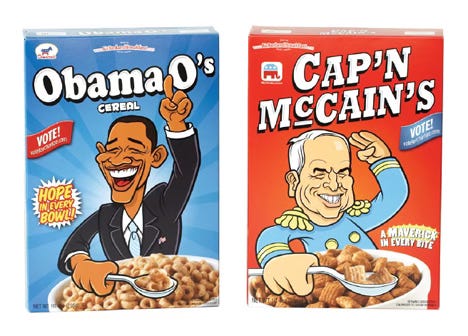
But why didn't they pivot to selling niche cereals? The cereal was a hit, wildly more popular and successful than the fledgling AirBed & Breakfast idea. I can only imagine waking up, heading downstairs, and pouring a bowl of "Biden Bran," "Trump Chex," or "Kamala Krunch" for my kids. But there's a reason, or ten, why I believe the Airbnb team didn't shift their focus to this new business.

1. Seasonality and Limited Market: Political cereals are like fireworks on the Fourth of July, exciting but short-lived. The appeal is tied to election cycles or specific political events. Once the event is over, so is the demand. Teaching my students to evaluate a problem involves considering the frequency, intensity, and density of the problem. Political Cereal doesn’t pass the test.
2. Brand Identity Mismatch: Airbnb's mission was to create unique travel experiences, not sell Breakfast (even though it was in the name). Pivoting to cereal would have diluted the brand and confused consumers about what Airbnb stood for.
3. Scalability Issues: Selling political cereal was a quick cash grab, but scaling it would've been a nightmare. Manufacturing, distributing, and marketing cereal on a large scale would require significant resources and expertise that didn't align with Airbnb's core strengths.
4. Regulatory and Legal Risks: Politically themed products have their own landmines, legal challenges, unwanted attention, and potential backlash. None of these were risks for a company trying to establish itself in the travel industry.
5. Lack of Long-Term Growth Potential: Political cereal is a novelty, not a solution to a real problem. Unlike Airbnb's core business, which addressed the need for affordable, unique lodging, cereal didn't offer any long-term growth.
6. Focus on Core Business: Airbnb's leadership had the strategic foresight to recognize that their time and resources were better spent refining and expanding their core platform, a platform potentially disrupting the travel industry globally. Diverting attention to cereal would have slowed their momentum.
7. Customer Retention: Cereal is a low-cost, low-commitment purchase, unlike booking accommodations, which fosters long-term relationships. Airbnb's core business has more potential for customer loyalty and repeat business. Besides, once the election ends, half of your cereal becomes obsolete.
8. Operational Complexity: Moving into food production would've introduced a new set of challenges, supply chain management, quality control, and food safety compliance. These distractions were unnecessary complications for a startup. Also, pricing can be tied to inflation and the commodities market.
9. Highly Saturated Market: The cereal market is already dominated by giants like Kellogg's and General Mills. Breaking into this market with a niche product would've been a Herculean task.
10. Brand Loyalty: Cereal buyers are creatures of habit, loyal to brands they've trusted for years. Competing against these entrenched players would've required massive marketing efforts, resources Airbnb, as a startup, didn't have.
Airbnb still uses the motto "Be a Cereal Entrepreneur" today: Think outside the box and do what it takes to solve a problem. Moreover, by focusing on its core mission and resisting the temptation of short-term opportunities, Airbnb has grown into a global leader in the travel industry. It's a lesson in staying true to your vision, even when the quick win stares you in the face.
Don’t get captured,
Zach