


Last week, I wrote about the three key aspects of any good operations team: People, Processes, and Systems. When these are properly integrated, they create operational excellence. But beyond these core elements, there are four overarching factors that determine whether operations function effectively: Culture, Leadership, Mission/Vision, and Execution. This week, I’m diving into why culture is critical to an organization and how different types of company cultures drive different results.
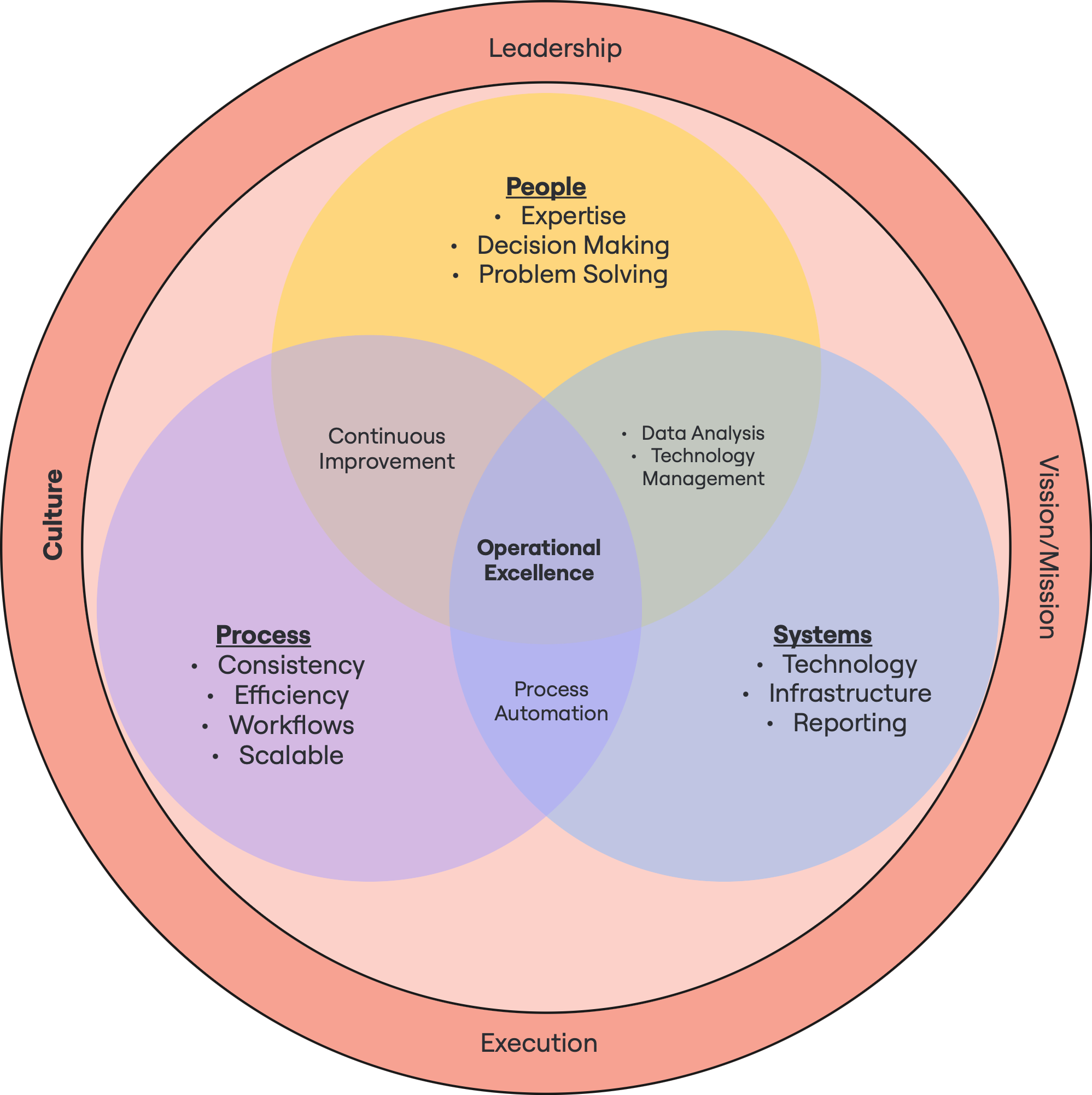
Culture: The Operating System of Your Organization
Think of culture as the operating system of an organization. Just like a computer’s OS dictates its behavior and functionality, company culture establishes behavioral norms. In fact, the root word of “culture” is “cult”, an extreme version of any culture where norms and behaviors are rigidly reinforced through shared beliefs, a common mission, and indoctrination.
Company culture isn’t much different. New employees go through onboarding to learn the rules, but many behaviors are absorbed by watching what others do. If everyone shows up late to meetings, punctuality clearly isn’t enforced. If most of the team comes in on Sundays to prep for the week ahead, it may not be mandatory, but if you want to advance your career, it’s expected. (By the way, if you’re going into finance, weekend work is just part of the deal.)
Culture defines how people interact, how information flows, and how problems get solved. If a company is deeply focused on customer satisfaction, it will allocate more resources to customer experience and support. On the other hand, if efficiency is the priority, expect leaner teams, automation, and fewer personal touches.
How Culture Shapes Operations
Culture doesn’t exist in a vacuum, it influences every aspect of operations. Let’s break it down:
Culture + Systems: The User Interface
Sticking with the operating system analogy (if you know me, you know I love analogies), culture determines how people interact with business systems. In a heavily regulated industry, for example, culture may demand strict adherence to compliance-driven systems.
Your company’s culture dictates what tools are adopted and whether they’re actually used. If leadership invests in cutting-edge accounting software but everyone still defaults to Excel, culture, not technology, is the real problem. The attitudes toward technology and change shape how systems evolve and adapt.
Culture + Processes: The System Architecture
You can have the best-designed processes in the world, but if there’s no mechanism for tracking efficiency and performance, they won’t be followed. Strong cultures support continuous improvement, while weak cultures default to “that’s how we’ve always done it.”
Is your culture resistant to change, or does it adapt to evolving technology, regulations, and market trends? Do processes emerge from collective learning, or are they dictated top-down? Culture determines whether your organization evolves or stagnates.
Culture + People: The Runtime Environment
In computing, the runtime environment (RTE) provides the resources an application needs to function. In operations, culture serves the same role for people.
Are employees empowered to make decisions, or does everything require bureaucratic approval process? When problems arise, does the team work together to solve them, or do they avoid blame at all costs? A culture where people fear failure leads to a stagnant organization, one where innovation is stifled and lessons go unlearned.
Is collaboration the norm, or do teams prioritize their own goals and career advancement over the company’s success? Does leadership reward individual achievement or team success? These cultural elements define how people show up and contribute to the business.
Building a Better Operating System
If you want to upgrade your company’s cultural operating system, here are some ways to start:
Align Incentives
Reward behaviors that reinforce the desired culture.
Remove incentives that drive contradictory behaviors (and be open about it).
Recognize cultural champions and empower them to create change.
Lead by Example
Leaders must embody company values. No more “do as I say, not as I do.”
Address cultural violations consistently. Yes, conflict is uncomfortable, but it’s a leader’s tool for driving change.
Celebrate culture wins visibly and frequently.
Enable Evolution and Change
Create feedback loops for learning. Encourage team members to share knowledge.
Adapt culture as the organization grows. Facebook’s early motto was “Move fast and break things.” Now, they can’t afford to break things without affecting the US economy. Cultures must evolve with scale.
Make the Implicit Explicit
Document cultural expectations and make them accessible.
Define the desired behaviors and norms, if leadership can’t articulate expectations, how can employees meet them?
Clarify decision-making protocols. In the Army, we had Critical Commander Information Reporting (CCIR), essentially, “wake-up criteria.” What decisions are so important that leadership must be alerted immediately? Everything else should be left to individual judgment.
Different Cultures, Different Outcomes
Not all cultures are the same, and each one produces dramatically different operational results:
Command-and-Control Culture (Windows OS): Hierarchical decision-making, standardized processes, strict adherence to rules.
Innovation Culture (MacOS): Rapid experimentation, decentralized authority, flexible processes.
Learning Culture (Linux OS/Open Source): Continuous improvement, feedback loops, psychological safety, and data-driven decision-making.
The bottom line is you can’t just download and install a new culture like a software update. It requires new architecture, onboarding, reinforcement, and periodic upgrades. Culture is the foundation that makes every other operational element work better. It doesn’t just dictate how things get done, it determines if they get done at all. The best-run operations thrive on a culture that aligns with the mission with company values, empowers people to make decisions, and adapts to change.

Connect with Zach
Website • Twitter • LinkedIn • Youtube